Persona planning: How to design actionable personas for 2026 and beyond
Persona planning turns static persona decks into a living system tied to data, decisions, and regular updates, so teams stay aligned in 2026.

In 2023, most companies had a persona deck sitting in a Google Drive folder somewhere. A few slides with stock photos, job titles, and vague pain points like “wants to save time.” Those personas were created during a rebrand or product launch, shared once, and promptly forgotten.
That approach doesn’t work anymore.
Persona planning is a strategic business process that uses data and research to create detailed, semi-fictional profiles of ideal customers. Buyers now research solutions through AI chat, YouTube walkthroughs, niche Discord communities, and micro-influencer recommendations. Your target audience fragments across dozens of channels before they ever hit your website. And if your personas still describe a “Marketing Manager, 35, based in Austin” without capturing how they actually make decisions in 2026, you’re building campaigns and features for someone who doesn’t exist.
Leveraging existing knowledge and market research is essential as a foundation for developing personas that accurately reflect your audience.
This guide walks you through the entire process of persona planning as a strategic, ongoing process, not a one-time deliverable. You’ll learn how to design a persona profile that is not about just one person, but represents a segment of users with shared characteristics. The guide covers developing personas through a structured process involving research, data collection, and validation, and shows how to drive real decisions across product, marketing, and customer success, and how to keep them current as markets shift.
What is persona planning?
Persona planning is the strategic process of defining, validating, prioritizing, and operationalizing user personas so they guide planning decisions across product, UX, marketing, and sales. Persona planning covers the entire process from research to implementation and ongoing review. It’s not the same as creating a few persona slides during a brand refresh and calling it done.
Think of it this way: persona creation is a project. Persona planning is a system.
The distinction matters because markets change faster than ever. In 2026, fragmented channels (Reddit, Discord, TikTok subcultures), AI-driven recommendations, and privacy-first regulations mean user behavior is more volatile. A persona built in 2022 based on pre-ChatGPT research habits is already outdated. Persona planning builds in the mechanisms to detect that drift and update accordingly.
Here’s what distinguishes persona planning from one-off persona work:
-
Ongoing, not episodic: Persona planning includes scheduled review cycles (quarterly light updates, annual deep overhauls) tied to your roadmap and campaign planning.
-
Cross-functional ownership: It involves product, marketing, sales, and customer success, not just the UX team or a consultant. Buyer personas focus on the decision-makers involved in the purchasing process, highlighting their motivations and concerns, while user personas center on the actual product users.
-
Tied to decisions: Personas connect directly to backlog prioritization, campaign targeting, and content calendars rather than existing as standalone documents.
-
Data-enriched and dynamic: Personas link to CRM segments, analytics filters, and experimentation tools so you can measure their impact.
-
Prioritized and constrained: Persona planning forces you to decide how many personas are needed to accurately represent your audience, and which 3–5 personas are primary and which are secondary or negative personas you deliberately deprioritize.
-
Governance included: There’s a clear owner, a single source of truth, and a process for updating and communicating changes.
Why persona planning matters in 2026
Research consistently shows that companies using well-defined personas see stronger results. To develop accurate and insightful personas, it is essential to gather relevant data and research about your target audience, using methods like user interviews, surveys, ethnography, market research, and competitor analysis. B2B brands with documented buyer personas typically report higher lead quality and improved conversion rates, often in the range of 10–30% improvements in key funnel metrics. The exact numbers vary by industry and execution quality, but the pattern holds: teams that know their audience outperform teams that guess.
Companies implementing persona-based strategies have reported up to 20% faster sales cycles.
The problem is that most existing personas were created between 2019 and 2022, before the current landscape took shape. Your ideal customer in 2026 might start their research by asking ChatGPT for recommendations, then watch a 90-second TikTok explainer, then check a Slack community for peer opinions, all before they ever see your landing page. If your persona still assumes they start with a Google search and read a whitepaper, your targeting is off.

Add from PixabayUpload
or drag and drop an image here
Clear alt text
Here’s what effective persona planning unlocks:
-
Sharper positioning: You stop trying to appeal to everyone and craft messaging that resonates with specific segments.
-
Higher conversion: Campaigns and landing pages tailored to persona motivations outperform generic approaches.
-
Better feature adoption: Product teams build for defined user types rather than abstract “users.”
-
More efficient ad spend: You exclude poor-fit audiences and focus budget on high-intent segments.
-
Aligned omnichannel journeys: Email, in-app messaging, sales outreach, self-serve docs, and community touchpoints all speak to the same understood personas.
-
Actionable insights for sales teams: Persona planning provides sales teams and marketing strategies with insights into buyer communication preferences, helping to enhance sales approaches.
-
Deeper customer understanding: Creating a target audience persona helps discover key customer insights, improve empathy, and guide decision-making through data collection like surveys.
Personalized messaging based on personas can lead to 10–20% higher engagement and 15% increased marketing efficiency.
Consider a B2B SaaS startup selling marketing automation tools. Their original “Marketing Manager” persona treated all marketing managers the same. After proper persona planning, they split this into two distinct personas: AI-power users who want deep automation and workflow customization, and AI-skeptics who need manual control and transparency into what the system does. These two groups need completely different onboarding flows, feature emphasis, and messaging angles.
Or take a DTC brand selling sustainable fashion. Their “Eco-conscious Millennial” persona seemed useful until they realized it lumped together resale-driven shoppers (who want to buy and sell secondhand) and price-anchored shoppers (who prioritize sustainability but won’t pay premium prices). Treating these as one persona meant campaigns underperformed across both segments.
Persona planning forces these distinctions to surface and become actionable.
Core components of a modern persona plan
Think of this section as the blueprint for what every persona should contain in 2026. Gone are the days when age, job title, and a stock photo were enough. Modern personas need to capture both “who they are” and “how they decide.” Role based personas, in particular, focus on a user’s specific job responsibilities, daily tasks, and the tools they use, highlighting how their role influences their interaction with a product.
Here are the core components to include:
-
Predictive demographics and firmographics: Role, seniority, company size, industry, region, and tech stack maturity: treated as context, not the primary lens.
-
Psychographics and values: Beliefs, risk tolerance, innovation appetite, and priorities that shape decisions.
-
Context of use: Remote vs. hybrid vs. on-site work, device preferences, environment (quiet office vs. noisy warehouse floor).
-
Digital behavior and channel habits: Where they research, what content formats they trust, which communities they participate in.
-
Goals and success criteria: What they need to achieve in the next 6–12 months, both business outcomes and personal outcomes.
-
Pain points and constraints: Functional limitations, emotional frustrations, organizational blockers, and external pressures.
-
Decision process and journey triggers: How they evaluate options, who else is involved, what triggers them to start searching.
-
Information sources and trust signals: Peer recommendations, analyst reports, case studies, GitHub stars, community endorsements.
-
Persona profile: A comprehensive document that includes basic demographics, skills, touchpoints, and tailored sections based on the specific goals of the project, allowing for flexibility and detailed customization.
To make this concrete, imagine two micro-examples:
Remote RevOps Director, North America, 2026: Works from home, manages a 7-tool stack that barely integrates, reports to a CFO who scrutinizes every new vendor. Researches via LinkedIn posts from peers, G2 reviews, and RevOps-focused Slack communities. Needs to consolidate tools and prove ROI within two quarters to justify budget.
Early-career UX Designer in Berlin, 2026: Three years of experience, works hybrid at a 200-person fintech. Active on Figma community forums and design Twitter. Wants to level up their prototyping skills and ship a feature that gets internal recognition. Price-sensitive for personal tool purchases, relies on employer to fund work tools.
Customer persona example: Consider “Sophie, Head of Customer Success at a SaaS startup.” Her persona profile includes: age 34, manages a remote team of 8, values transparency and rapid feedback, relies on Slack and Notion, and is motivated by improving NPS scores. A direct quote: “If I can’t see customer health at a glance, I can’t do my job.” This level of detail helps guide both product design and marketing messaging, ensuring solutions address her real-world needs by helping teams gather and analyze market insights.
Both are “users” of design or ops tools, but their contexts, motivations, and decision processes are entirely different.
Demographics and firmographics
Demographics and firmographics are table stakes: necessary but not sufficient. They provide the structural context that helps you segment and target, but they shouldn’t be the primary lens for understanding your typical users.
For B2B personas, capture fields such as age range (not exact age: a range like 30–45 is more realistic), role and job title, seniority level (IC, manager, director, VP, C-level), company size (employee count and revenue band), industry and sub-industry, region and regulatory environment (e.g., EU AI Act constraints, GDPR, CCPA), tech stack maturity (legacy systems vs. modern cloud-native), remote, hybrid, or on-site work arrangement, and procurement complexity (self-serve purchasing vs. formal RFP process).
For consumer personas, adjust to age range and life stage, geographic region and urban/suburban/rural context, household composition, income band and price sensitivity, and device and platform preferences.
For example, a B2B mid-market persona might be a Director of Demand Gen, 35–45, at a Series B SaaS company (100–300 employees, $15M–$40M ARR), based in North America, working hybrid, reporting to a CMO, managing a team of 3, using HubSpot, Salesforce, and 4–5 point solutions, with signing authority up to $25K annually; larger purchases require CFO approval.
A consumer persona example could be an urban renter, 28–35, living in a major metro area, with household income $70K–$100K, primarily mobile-first, active on Instagram and TikTok, shopping online for convenience and comparing prices across 3–4 sites before purchasing, valuing sustainability but unwilling to pay more than 15% premium for it.
Psychographics, values, and attitudes
Psychographics capture the beliefs, values, and attitudes that shape how someone makes decisions. Two people with identical demographics can have opposite psychographic profiles: and that difference determines which messaging resonates, which features they adopt, and whether they become champions or churners.
Key psychographic dimensions to capture include innovation appetite (early adopter vs. wait-and-see vs. skeptic), trust in AI and automation (eager to delegate vs. needs transparency and control), sustainability priority (primary driver vs. nice-to-have vs. irrelevant), price sensitivity (value-focused vs. premium-willing vs. purely ROI-driven), brand loyalty (sticks with known vendors vs. always evaluating alternatives), and risk tolerance (willing to bet on new tools vs. needs proven track record).
Consider two 35-year-old Product Managers at mid-size SaaS companies with similar demographics but opposite psychographics: PM Alex, an AI-enthusiast who has integrated Copilot into daily workflow and tries beta products promising time savings, fearing falling behind competitors; and PM Jordan, an AI-skeptic who needs transparency and case studies before trusting AI features.
These two need different onboarding, feature introductions, and sales conversations. Persona planning surfaces this distinction before wasting resources on one-size-fits-all approaches.
Behaviors, channels, and content habits
Understanding where your personas spend time and how they research is critical for reaching them. User behavior in 2026 spans far more channels than traditional marketing assumes.
Research behaviors to document include reading G2, Capterra, or TrustRadius reviews; watching YouTube walkthroughs and product demos; checking TikTok explainers and short-form video content; asking questions in Slack, Discord, or industry-specific communities; querying AI search tools (ChatGPT, Perplexity, Claude); attending virtual and in-person community-led events; following niche newsletters and podcasts; and engaging with LinkedIn thought leadership and DM outreach.
For each persona, map which channels they trust and which content formats they prefer. For example, a RevOps Director might primarily use LinkedIn, RevOps Slack communities, and G2, trusting peer case studies, ROI calculators, and comparison guides, while distrusting cold emails and generic webinars. An early-career Designer might frequent Figma community, design Twitter, and YouTube, preferring tutorials, templates, and short video demos, while avoiding whitepapers and gated content. A SMB Founder might rely on Indie Hackers, niche podcasts, and Perplexity, valuing founder stories and pricing transparency pages, and avoiding enterprise-focused content.
This channel and content preference matrix is essential for campaign planning and content calendars, as a persona living in Discord communities won’t respond to the same tactics as one relying on analyst reports.
Goals, outcomes, and definitions of success
Outcome-based thinking transforms personas from descriptions into decision-making tools. Instead of vague goals like “wants to improve marketing,” capture specific outcomes tied to timelines.
Separate business outcomes from personal outcomes. Business outcomes might include cutting customer acquisition cost by 20% before Q4 2026, reducing churn from 8% to 5% annually, shipping an AI-assisted onboarding flow before the 2026 holiday season, or consolidating from 7 tools to 3 by end of fiscal year.
Personal outcomes might include getting promoted to Senior Director within 18 months, reducing weekend work and improving work-life balance, building internal credibility by championing a successful initiative, or developing new skills that increase market value.
Example goal statements to include in personas could be: “Needs to demonstrate measurable pipeline impact from content marketing by March 2026 board meeting,” “Must pass SOC 2 compliance audit before enterprise sales push in H2 2026,” or “Wants to reduce time spent on manual reporting from 10 hours/week to 2 hours/week.”
These specific goals help product teams prioritize features and help marketing craft messaging that speaks to real urgency.
Pain points, constraints, and risks
Pain points span multiple dimensions. Capturing them with specificity: and linking them to measurable business impact, makes personas actionable.
Functional pains include tool sprawl from 7+ overlapping SaaS subscriptions that don’t integrate, manual data entry between systems eating 5+ hours weekly, and reporting dashboards that take days to update.
Emotional pains include burnout from constant context-switching, anxiety about job security if key metrics don’t improve, and frustration with lack of visibility into what’s working.
Organizational pains include misalignment between marketing and sales on lead quality definitions, CFO skepticism about new tool investments without clear ROI proof, and engineering backlog that delays integrations for 6+ months.
External pains include ad spend volatility after privacy changes in 2024–2025, uncertainty about AI regulations affecting product roadmap, and economic headwinds causing budget freezes and hiring slowdowns.
Each pain should be linked to a business impact. For example, tool sprawl from 7+ tools might cause $40K+ annual redundant spend and 15% slower campaign launches; manual reporting might cost 5 hours/week × $75/hour = $19,500 annual labor cost; sales-marketing misalignment might lead to 30% of leads rejected by sales as unqualified.
Decision-making journeys and buying committees
In 2026, personas rarely make purchasing decisions alone. B2B buyers sit inside “micro-committees” where multiple stakeholders influence or approve decisions. Your buyer persona might be the champion, but they need to convince a security lead, a finance controller, and an end-user group.
Typical decision stages to map include:
-
Trigger: What event initiates the search? (Missed quarterly target, new leadership mandate, tool contract expiring, competitor announcement)
-
Exploration: Informal research via peers, communities, AI search, content consumption
-
Formal evaluation: Vendor shortlist, demo requests, feature comparisons, security questionnaires
-
Pilot/POC: Sandbox trial, limited rollout, proof-of-concept with success criteria
-
Procurement: Legal review, contract negotiation, budget approval
-
Rollout: Implementation, training, change management
-
Expansion and renewal: Upsell conversations, annual renewal, multi-year commitments
For a 3–6 month B2B sales cycle, this might look like:
In Q1 2026, a Director of Ops hits a pain point after a failed quarter and starts researching alternatives by asking in Slack community, reading G2 reviews, and watching a YouTube demo—an approach often informed by building customer personas in market research.
In early Q2 2026, they bring a shortlist to the VP and Security Lead, request demos, and send security questionnaires. IT reviews integration requirements.
In mid Q2 2026, they run a 30-day pilot with a subset of the team, defining success criteria such as a 20% reduction in manual work.
In late Q2 2026, the pilot succeeds, finance approves the annual contract, and legal reviews the MSA.
In Q3 2026, full rollout occurs with CSM-led onboarding and the first expansion conversation at 90 days.
Document the key touchpoints and who’s involved at each stage. This informs not just marketing content but also sales enablement materials and customer success handoffs.
A step-by-step persona planning process
Persona planning works best as a repeatable framework you run annually or twice a year, for example, every March and September, timed to your planning cycles. This guide covers the entire process of developing personas, from research to implementation and iteration, ensuring you have a comprehensive workflow for creating accurate and actionable user profiles. Here’s a six-stage process that balances rigor with practicality.

Add from PixabayUpload
or drag and drop an image here
Clear alt text
The stages:
-
Discover: Gather qualitative and quantitative research data
-
Segment: Cluster users by goals and behaviors, not just demographics
-
Design: Create persona artifacts with structured fields
-
Validate: Test personas with real users and internal teams
-
Implement: Embed personas into tools, processes, and planning cycles
-
Evolve: Establish governance and iteration cadence
Creating personas is an ongoing practice that should evolve as you learn more about your users.
Group discussions and analysis sessions are essential during persona workshops for synthesizing insights, identifying patterns, and generating new ideas in research studies.
Each stage has specific activities and outputs. Let’s walk through them.
Creating truly helpful user personas is both an art and a science.
Step 1: Research and data collection
Combine qualitative insights (interviews, win/loss analysis, support tickets, sales calls) with quantitative data (product analytics, CRM, surveys, reviews, social listening). Leverage existing knowledge and market research to develop accurate personas. Capture verbatim quotes, objections, tools used, triggers, and decision criteria.
Step 2: Audience segmentation and prioritization
Cluster users by goals and behaviors: not assumptions—to identify distinct personas. Aim for 3–5 primary personas per product line. Use behavioral, goal-based, and journey-based clustering. Conduct workshops to sort research quotes into meaningful groups and name each persona.
Step 3: Designing persona artifacts
Create concise 1–2 page persona documents including name, photo, summary, demographics, goals, pains, behaviors, decision criteria, and 2–3 direct quotes. Tailor layouts for marketing, UX, and sales needs. Use real user quotes to make personas memorable and actionable.
Step 4: Validation and alignment
Validate personas with real users and internal teams. Conduct validation calls and workshops to ensure accuracy and relevance. Adjust language, priorities, and assumptions based on feedback.
Step 5: Embedding personas into planning and execution
Integrate personas into product, marketing, sales, and customer success workflows. Tag initiatives, campaigns, and CRM contacts by persona. Use personas to guide content, experiments, and customer interactions.
Step 6: Iteration cadence and governance
Establish regular reviews: quarterly light updates and annual deep overhauls. Assign a single owner responsible for maintaining and communicating persona updates. Adjust personas based on new data, market shifts, and feedback.
Types of personas to include in your planning
Different products and business models require various persona types. Buyer personas focus on decision-makers and their motivations, while user personas represent the actual product users and their workflows. Role-based personas highlight specific job responsibilities and tool usage. Additionally, target audience personas help uncover key customer insights and improve empathy through user research and market segmentation. A customer journey may involve user personas, buyer personas, influencers, and champions, each needing distinct documentation, as well as strategies to recruit participants for user research.
User personas
These represent daily product users, defined by their tasks, environment, and feature usage. For example, a CX Specialist using an AI ticketing tool during peak season with specific workflow needs.
Buyer personas
These represent decision-makers concerned with ROI, risk, and procurement processes. For example, a VP of Finance requiring compliance and vendor references before purchase.
Influencer and champion personas
Influencers shape decisions; champions advocate internally and need materials to support buying cases.
Negative personas
Profiles deliberately deprioritized to avoid wasted effort on poor-fit prospects, such as startups seeking free tiers or agencies without purchase authority.
Including these persona types ensures focused marketing, sales, and product strategies.
From static documents to living persona systems
Traditional persona PDFs from 2018–2020 fail in fast-moving markets. They sit in folders, get outdated, and disconnect from actual customer data.
The shift is from “persona documents” to “persona systems”: connected data, templates, and workflows that make personas queryable and measurable.
Key transformations include linking personas to analytics segments so you can measure behavior by persona, adding persona fields to CRM records so you can track pipeline and revenue by persona, connecting personas to experimentation tools so you can run persona-targeted tests, storing personas in collaborative workspaces (Notion, Confluence) with version history, and creating automated workflows that assign personas based on behavior patterns.
Connecting personas to analytics and CRM data
Map each persona to specific data filters you can query. For example, a Self-Serve Explorer might be identified by signing up self-serve, inviting 3+ teammates, and activating within 7 days, with CRM leads sourced organically and company size under 50. An Enterprise Evaluator might have requested a demo, belong to a company size of 500+, viewed pricing page 3+ times, with outbound lead source in financial services. An Expansion Champion might be an active user who submitted 2+ feature requests and is a NPS promoter, with contact role as power user and account stage as expansion.
Implementation steps include defining behavioral and firmographic criteria for each persona, adding a persona field to your CRM (HubSpot, Salesforce), building workflows that auto-assign personas based on criteria, creating saved segments in analytics tools matching each persona, and auditing accuracy monthly by spot-checking assignments.
This integration makes personas measurable, allowing you to answer questions like: “What’s the trial-to-paid rate for Self-Serve Explorers vs. Enterprise Evaluators?”
Integrating personas into experimentation and roadmaps
Tag A/B tests, feature flags, and roadmap items with target personas.
Examples include running onboarding experiment X only for ‘Time-Pressed Manager’ persona, prioritizing roadmap item Y for ‘Security-Conscious Enterprise Buyer’ in H1 2026, or feature flagging a new AI assistant for ‘AI-Enthusiast’ segment before general rollout.
Add persona impact fields to experiment templates, such as hypothesis (e.g., simplified onboarding will increase activation for Self-Serve Explorers), primary persona, secondary persona, success metric (e.g., 7-day activation rate), and minimum detectable effect (e.g., 5% improvement).
This linkage helps track which personas benefit most from changes, and whether you’re actually improving outcomes for priority segments.
Maintaining a single source of truth
Store personas in a central, accessible location with version history and clear ownership.
Recommendations include using Notion, Confluence, or a dedicated workspace, not scattered Google Docs; establishing a versioning scheme like “Persona Pack v2.1 – March 2026”; noting when each persona was last validated with real users; creating quick-reference views such as one-page summary per persona and comparison table by goal and channel; and linking from other tools (CRM, project management, design system) back to the source.
Every team member should know where current personas live. Keeping everyone on the same page is essential to ensure successful user research, data collection, and customer understanding. If people are referencing outdated versions or personal copies, the system is broken.
Common persona planning mistakes (and how to avoid them)
Teams that treat personas as checkbox exercises make predictable mistakes. Here’s how to avoid them.
Mistake 1: Treating personas as a one-time deliverable
The problem: Teams build personas during a redesign or brand refresh—say, in 2023—and never revisit them. Messaging and features drift away from current user reality as markets and tools change.
The fix: Formalize a review cadence tied to planning cycles. Schedule persona review as a recurring calendar event (e.g., pre-Q4 budget planning, annual roadmap offsites). Product marketing or research owns the calendar invite and preparation.
Mistake 2: Over-indexing on demographics and job titles
The problem: “CMO Carla, 38, lives in London, enjoys hiking” tells you nothing about how she evaluates software or what would make her champion your product.
The fix: Focus planning conversations on goals, workflows, and constraints. Demographics become supporting context, not the main story.
A side-by-side comparison illustrates this: A demographic-only persona might be “Sarah, 35, Marketing Director, Boston,” while a behavior-rich persona would describe her as a Marketing Director at a 200-person SaaS, managing $500K annual ad budget, evaluating new tools by asking peers in a CMO Slack community, refusing to consider vendors without G2 reviews, and needing to prove CAC reduction to CFO within 2 quarters.
Mistake 3: Creating personas without involving customer-facing teams
The problem: Personas built only by strategy or design teams miss real objections that sales and support hear daily. Using survey design best practices can help gather these critical insights, avoiding academic and disconnected personas.
The fix: Include account executives, CSMs, support agents, and solution engineers in workshops and validation calls. Run a 60–90 minute alignment session where frontline teams annotate existing personas with observations from recent customer conversations.
Mistake 4: Having too many or unprioritized personas
The problem: Some organizations end up with 10–15 personas per product. No one can remember them all, and planning discussions become paralyzed by competing priorities. Determining how many personas are needed is crucial, too many personas can dilute focus, while too few may overlook key customer segments.
The fix: Clearly rank personas from primary to tertiary. Focus roadmaps and campaigns on the top 3–5. Define “supporting” personas used only in edge-case scenarios.
For example, a company with three similar SMB owner profiles (retail, services, e-commerce) might consolidate them into one primary “Growth-Stage SMB Owner” persona with documented variations for industry-specific needs.
Mistake 5: Not linking personas to measurable outcomes
The problem: Persona planning fails when teams can’t answer: “Did focusing on Persona A change revenue, activation, or retention?”
The fix: Choose 1–3 KPIs per priority persona. Track these metrics specifically for persona-tagged cohorts.
For example, for the “Self-Serve Founder” persona, track first-week activation rate and 90-day retention for cohorts acquired after the April 2026 persona refresh, comparing to pre-refresh cohorts to measure impact.
Measurable links justify continued investment in market segmentation and persona work.
Running persona planning workshops
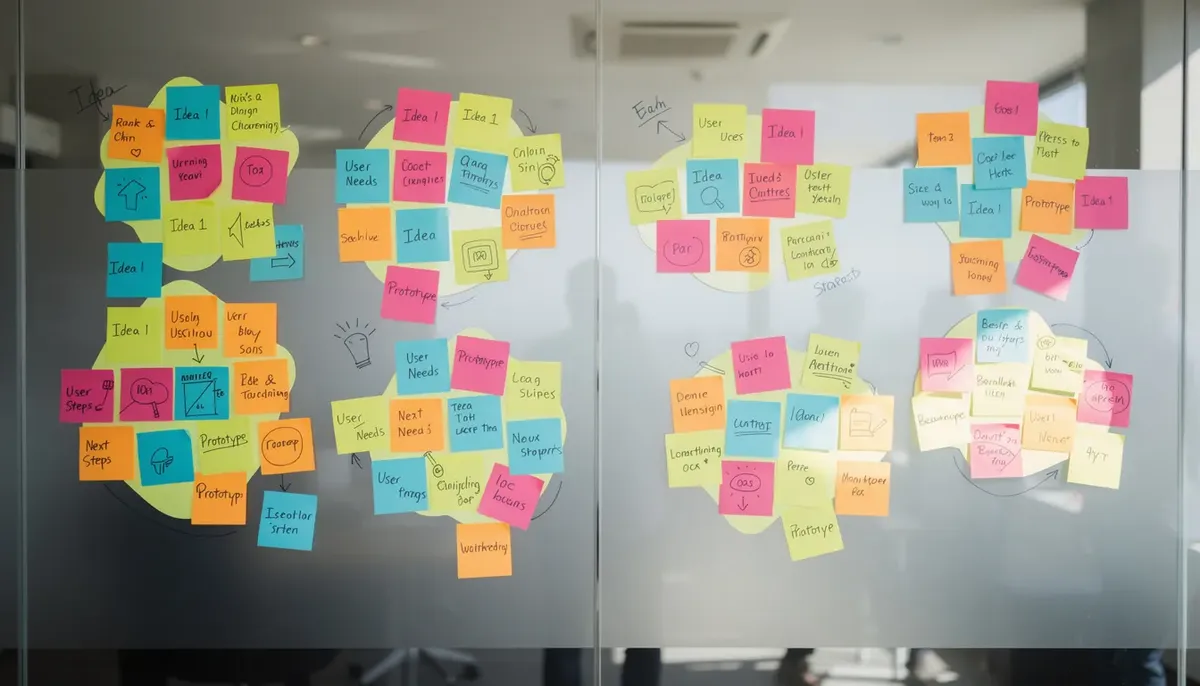
Workshops are the most effective way to co-create and refine personas with cross-functional teams. They build shared understanding and surface insights that no single team holds.
When to run workshops:
-
Pre-launch of a new product line
-
Entering a new geography or market segment
-
Before annual or bi-annual planning cycles
-
After significant market shifts (new competitor, regulatory change, major product pivot)
Add from PixabayUpload
or drag and drop an image here
Clear alt text
Preparing for a persona planning workshop
Pre-work to gather:
-
Recent research summaries (interviews, surveys, usability studies)
-
Analytics dashboards showing user segments and behaviors
-
Pipeline and win/loss reports from the last 6–12 months
-
Support logs and common issues
-
Competitive intelligence and market trends
Attendee selection: For expert insights or strategic marketing guidance in your attendee selection process, consider consulting Bruce Millard on CleverX.
-
Invite cross-functional representation: product, design, marketing, sales, customer success, data, leadership
-
Cap group size at 8–12 for effectiveness; larger groups split into breakouts
-
Ensure at least one person with direct customer contact per breakout group
Sample agenda (3-hour remote session):
Start with welcome, objectives, and ground rules for 15 minutes, followed by a 30-minute research readout covering key findings and quotes. Then, conduct a 30-minute breakout session for quote clustering and segment identification, take a 15-minute break, proceed with a 45-minute breakout for drafting persona narratives (one per group), spend 30 minutes presenting and critiquing drafts, and conclude with a 15-minute prioritization vote, next steps, and owner assignments.
Exercises to build and refine personas collaboratively
Exercise 1: Quote clustering Print or display 50–100 research quotes. In small groups, sort quotes into clusters based on similarity. Label each cluster with a working persona name. Debate edge cases as a group.
Exercise 2: Empathy mapping For each emerging persona, fill in a 4-quadrant empathy map: What do they say? Think? Do? Feel? Use research evidence, not assumptions.
Exercise 3: Day-in-the-life story Write a 200-word narrative describing a typical Monday morning for your primary persona in March 2026, including how they use your product. Read aloud and critique for realism, and consider exploring user research techniques to inform your feedback.
Exercise 4: Journey mapping Map the persona’s journey from trigger to purchase to expansion. Identify touchpoints, emotions, and questions at each stage. Note where